The
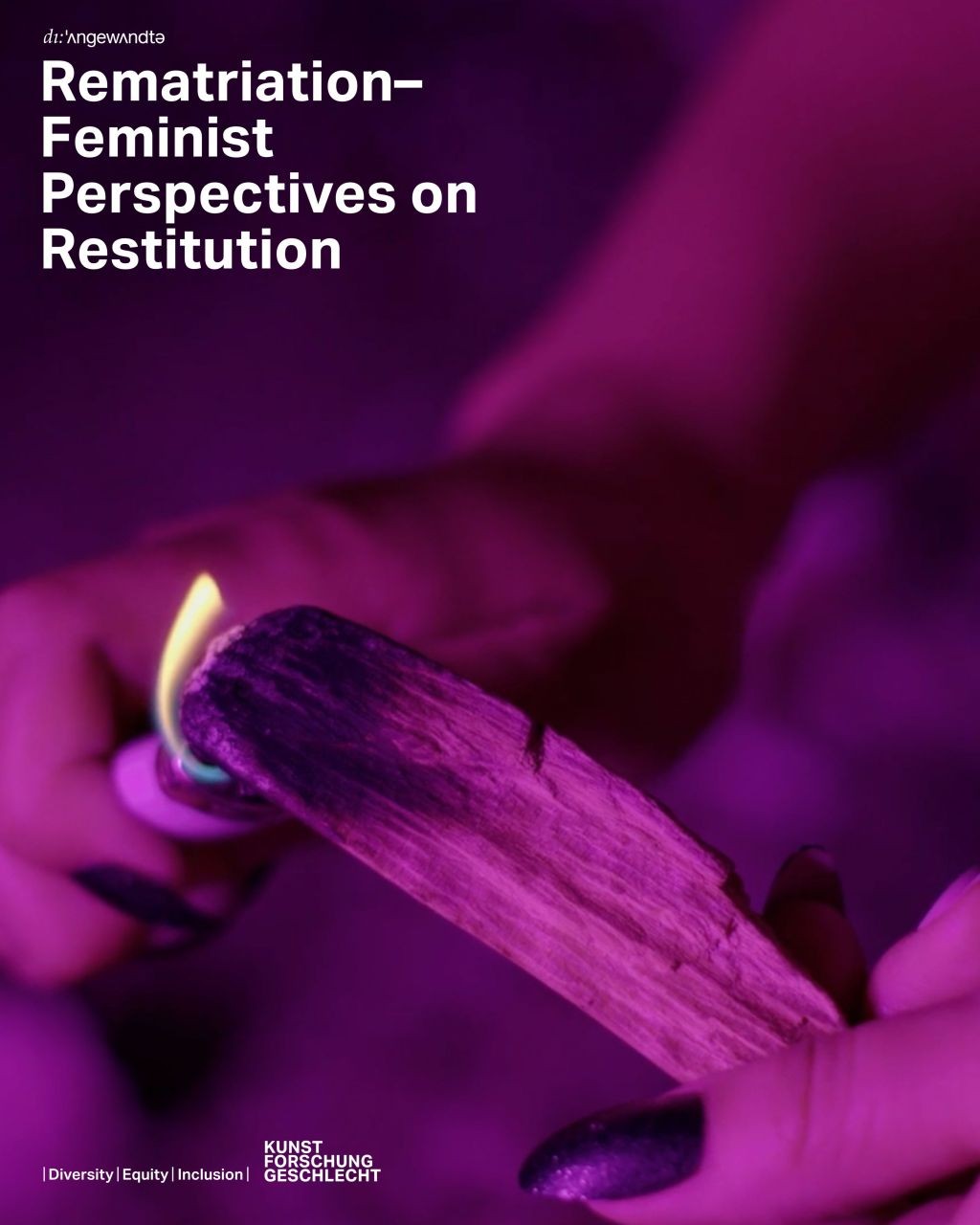
"Art–Research–Gender" lecture series is an event series organized by Diversity, Equity, Inclusion.
In the academic year 2026/27, the lecture series looks at practices of rematriation as a challenge
to colonial logics of ownership, return, and value – going beyond symbolic gestures or return of colonial objects, and instead
centering relations to land, ancestors, community, and more-than-human kin.
Register
by October 07, 2026 here LecturesVerena Melgarejo Weinandt07.10.2026, 6:00 pm, Auditorium, Ground floor, Vordere Zollamtsstraße 7, 1030 Vienna
Un_mögliche
Rematriations – eine Verortung in Wien
Über Machtstrukturen in Museen, koloniale Fantasien und verweigerte Restitutionen
Rematriation fordert unser Verständnis von Restitution heraus. Performative und aktivistische Arbeiten machen die
Gewalt kolonialer Machtverhältnisse in Archiven und Museen sichtbar. Sie verorten diese Verhältnisse auch in Wien und fragen
nach verweigerten Rückgaben und den kolonialen Fantasien über indigene Menschen, die ihnen zugrunde liegen.Monica Anegbeode21.10.2026, 6:00 pm, via Zoom
We Are Still Waiting
When Return Alone
Is Not EnoughThis lecture explores colonial restitution between the Congo and Belgium beyond the return of
objects. Through case studies of human remains, sacred objects and community refusal, it examines how dignity restoration
requires redistributing authority over how colonial harm is recognised and addressed. Ultimately, the challenge is transforming
restitution from an act of transfer into relational repair.
Yrine Matchinda 04.11.2026,
18:00, via Zoom
Rematriation of Sacred Objects
Cameroonian Sacred Objects and the Ethics of Colonial RepairWhat happens when sacred objects taken during colonial rule return home? This lecture explores rematriation as a process
of relational, spiritual, and cultural repair. Drawing on research into Cameroonian sacred objects held in German museums,
it asks how their return can restore relationships between communities, ancestors, memory, and cultural heritage.
Jamille Pinheiro Dias25.11.2026, 6:00 pm, Auditorium, Ground floor, Vordere Zollamtsstraße 7, 1030
Wien
Rematriating the Tupinambá Cloak
Women’s Knowledge and Collective Reactivation among the TupinambáThis lecture examines rematriation among the Tupinambá de Olivença of Serra do Padeiro, Bahia, Brazil. Thinking through
artist and researcher Glicéria Tupinambá’s visits to European museums holding Tupinambá heritage and her participation in
the 2024 Venice Biennale, it discusses why repatriation alone is insufficient to provide the conditions that sustain the ancestral
feather cloak as a living presence.
Claudia Holgado Chacón13.01.2027, 6:00 pm, via Zoom
Reactivating the Archive
Gender, Visual Memory and Collective Creation Through the Julia Chambi ArchiveThis lecture presents the ongoing work of the Julia Chambi Archive as a living territory of memory, restoration and
intergenerational dialogue. The archive, an educational initiative based in Cusco, is dedicated to preserving, researching,
and reactivating the visual legacy of Julia Chambi López, the first female photographer from the Andes region of Peru. By
reactivating this legacy, we can symbolically repair the gendered and racialised exclusions embedded in the Andes' institutional
visual memory.
Universität für angewandte Kunst Wien: Auditorium, Vordere Zollamtstraße 7, EG, 1030 WienWheelchair accessible. Further information about accessibility:
dieangewandte.at/barrier-freeInstagram AccountResponsible
staffOrganizer, Concept & organisation of the series Diversity, Equity, Inclusion: Doris Löffler
Course
management: Maria Bussmann
Artistic-Scientific Advisory Board: Zehra Baraçkılıç, Maria Bussmann, Sofia Bembeza, Edith
Futscher, Barbara Graf, Nanna Heidenreich, Kristina Pia Hofer, Annette Krauss, Doris Löffler, Julia Sprenger