What’s it like to be a woman when the world’s on fire?
What’s it like to be transgender when people want you dead?
Was ‘Nature’ always Trans*?
Can its destruction
then be understood as transphobia – another mode of transfem erasure?
If technology was always nature, and labor
was always feminine, how might their interwoven worlding be shaped by artistic and academic modes of knowledge production?
What do trans* bodies know that art and science must now learn?
Drawing on Luce DeLire’s analysis of McKenzie
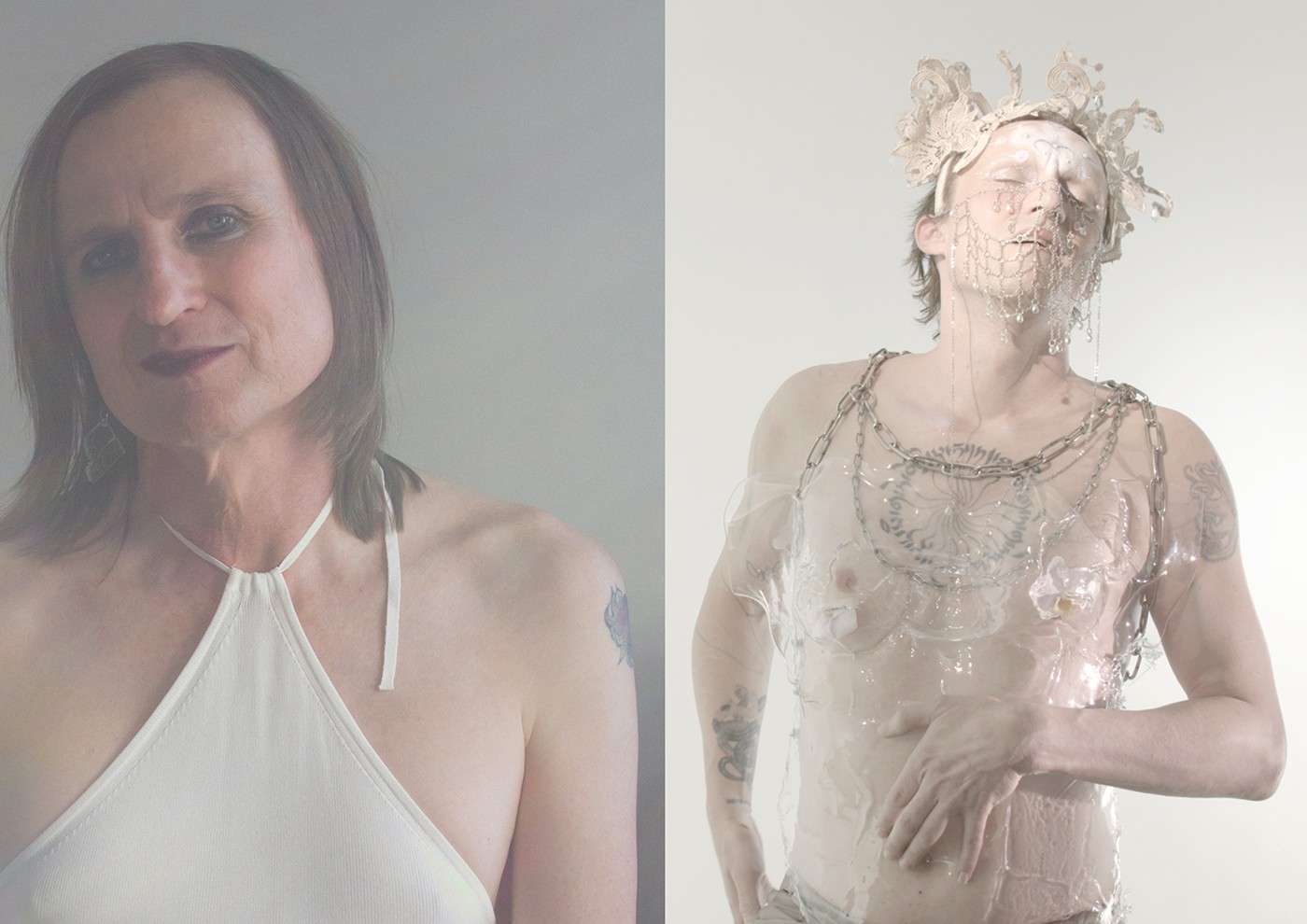
Wark’s ouvre and Ms. Wark’s performance art collaboration with Ariadne Randall, Ms. Wark and Ms. Randall will discuss modes
of knowing in performance, media, and trans* life; the challenges and benefits of interdisciplinary formal production; and
ask if Cybele ever really left us. If World is a cybernetic, transgender goddess from the future – then, honey, who’s an alien
now? The event follows the premiere "Reverse Cowgirl II: Ride to the Top", at BRUT, April 10th, on the night before this discussion.
McKenzie Wark
is an Australian-born writer and scholar. Wark is known for her writings
on media theory, critical theory, new media, and the Situationist International. Her best known works are A Hacker Manifesto
and Gamer Theory. Her most recent, post-transition works of autofiction and autotheory – including Raving, Reverse Cowgirl
and Love and Money, Sex and Death – brought her new audiences. She is a professor of media and cultural theory at the New
School in New York.
Ariadne Randall
is an American artist, composer and writer
based in Vienna. Her work practices worldbuilding through transmedia narrative. Through strategies of material depth and formal
juxtaposition, she creates spaces for imagination in sound, language and image. She holds degrees in classical composition
and contemporary art from UCLA and Bard MFA. Her work has been heard widely, from Lincoln Center and a recent song cycle for
the Volksoper Wien to countless basements. Her Reverse Cowgirl Quartet rides her gender transition towards larger questions
of identity and becoming. Her debut record as a transgender woman was released to critical acclaim in 2024 on Oxtail Recordings.
She is represented by Galerie Peter Gaugy (Brussels/Vienna).
Nanna Heidenreich
is
a media culture scholar and curator for film, video and political and theoretical interventions. Since October 2020, she has
held the professorship for Transcultural Studies at the University of Applied Arts in Vienna, following positions in Düsseldorf,
Cologne, Hildesheim and Braunschweig.
The School for Transformation (Transformation Studies. Art
x Science) is presenting a lecture series that explores the role of aesthetics in transdisciplinary research. Artistic strategies,
just like transdisciplinary approaches, do not start from fixed onto-epistemic positions, but draw on a multiplicity of registers
and perceptions to disrupt hegemonic knowledge regimes.
Likewise, both reject disciplinary boundaries in favor of
transversal approaches, aiming to undo rigid distinctions between thinking and practice, embodied knowledge and scientific
expertise. Based on a heterogenous mix of theoretical and practice-based interventions the lecture series asks:
To
what extent can artistic strategies be transferred to other contexts? And is that indeed desirable, given the situated, open-ended,
and speculative nature of arts-based research? Where do we need to insist on the autonomy of aesthetic practice to stay clear
from the demands of transferability, valorisation and impact?
In this spirit the series assembles a plurality of
voices, case studies and theoretical perspectives, to explore what artistic strategies and aesthetics bring to the field of
transdisciplinary research.